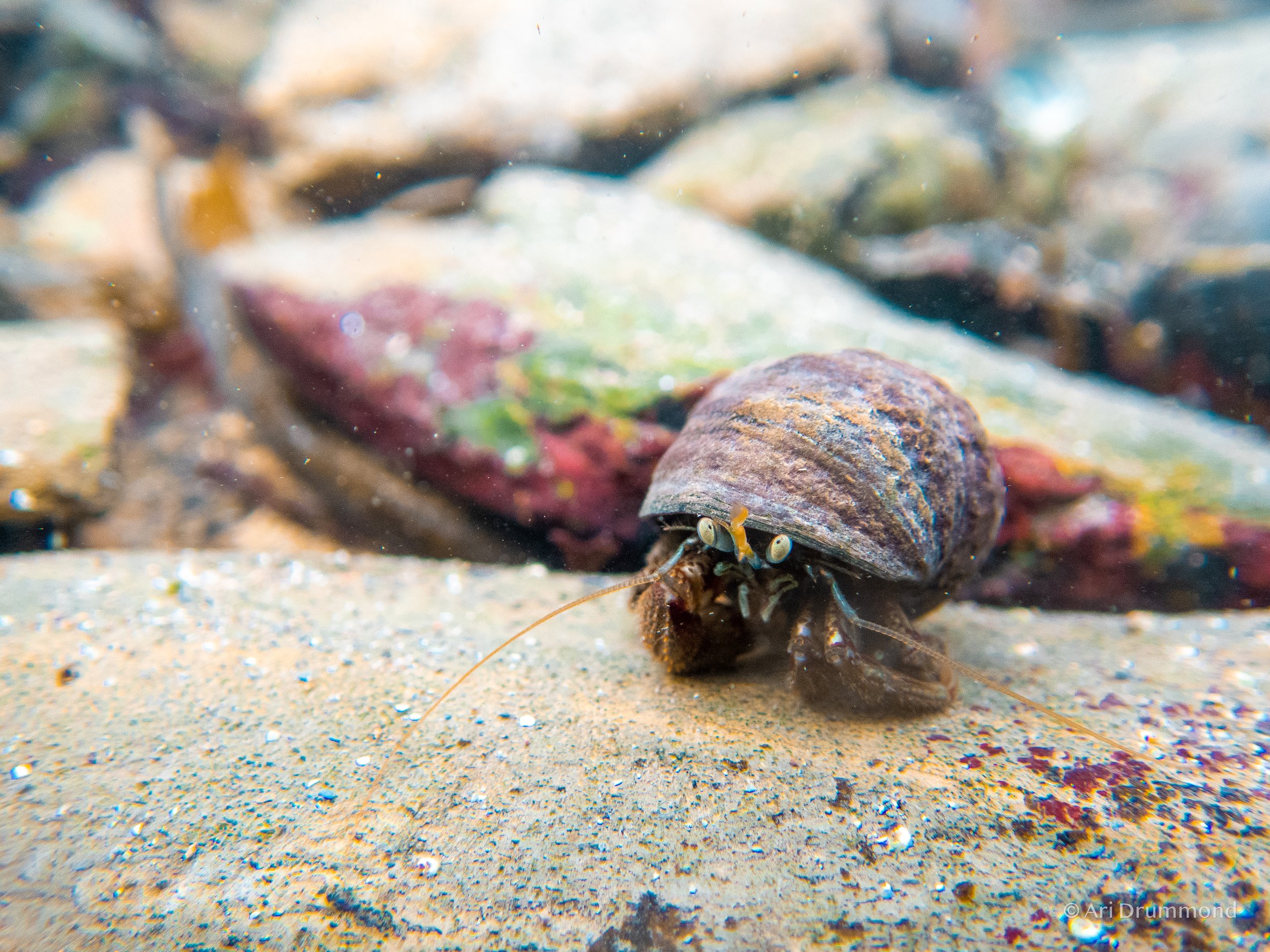
Ari Drummond

Hi! I’m a perpetually damp and salt-encrusted marine biologist working on my PhD!
My research focuses on hermit crabs, but I have a passion for understanding marine invertebrates, more generally.
Dividing my time between tinkering in the lab and trekking through rockpools, I pursue answers to questions about how these captivating crustaceans perceive and interact in their watery world.
Though I have many interests, I focus on issues relating to the evolution and ecological context of information processing, sensation, awareness—and dare I say, maybe even the BIG QUESTIONS of sentience and consciousness—in animal life.
Research
-
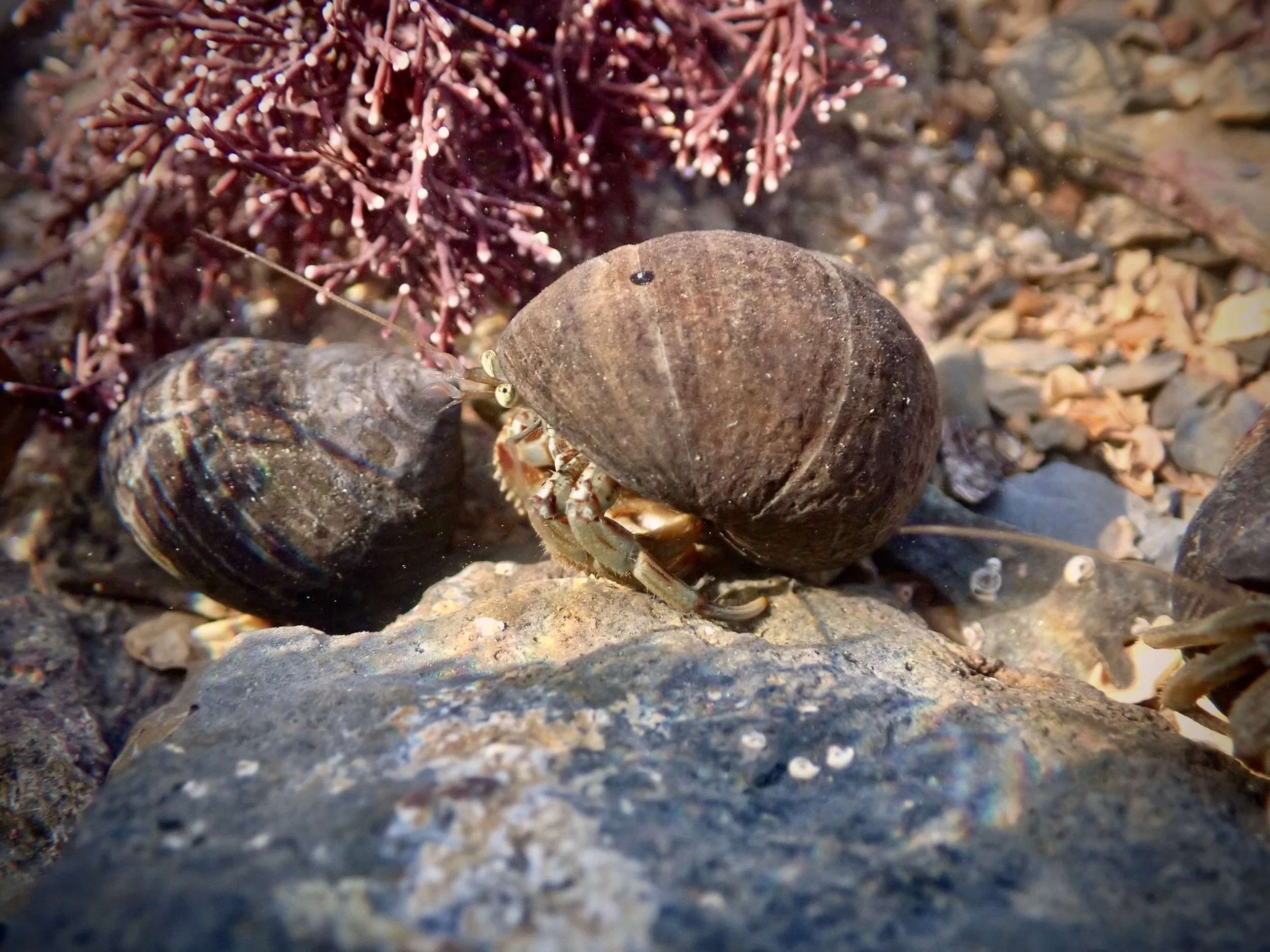
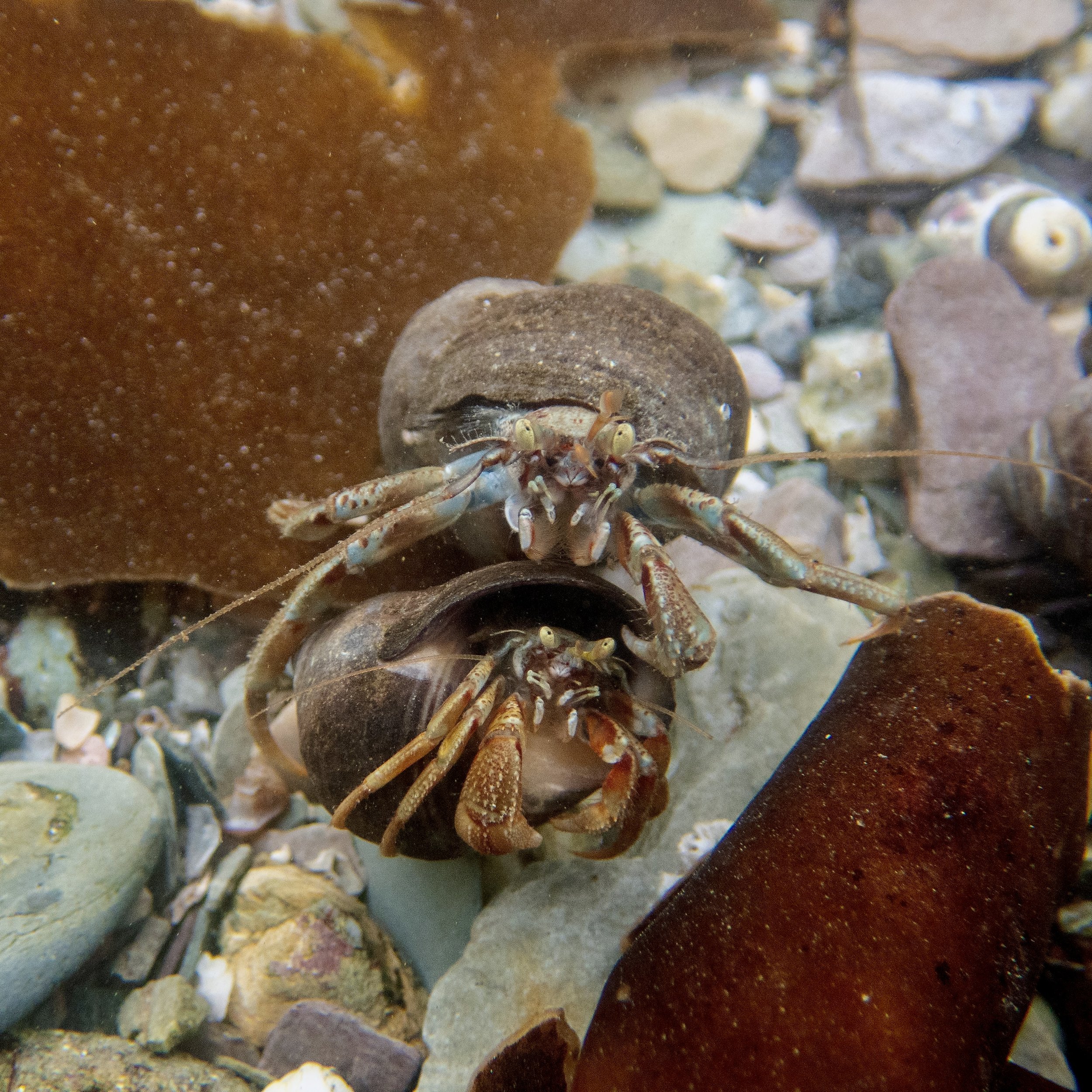
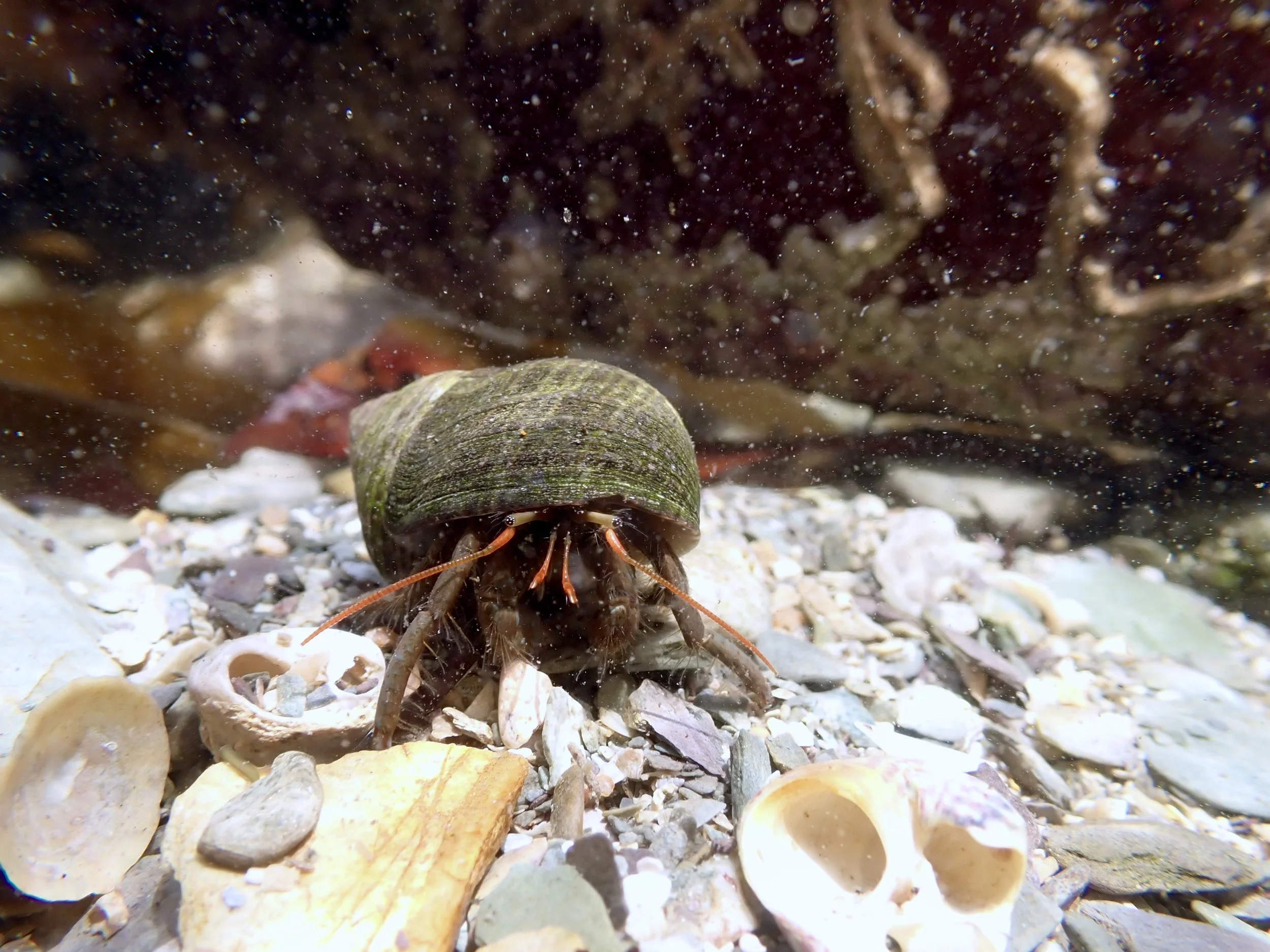
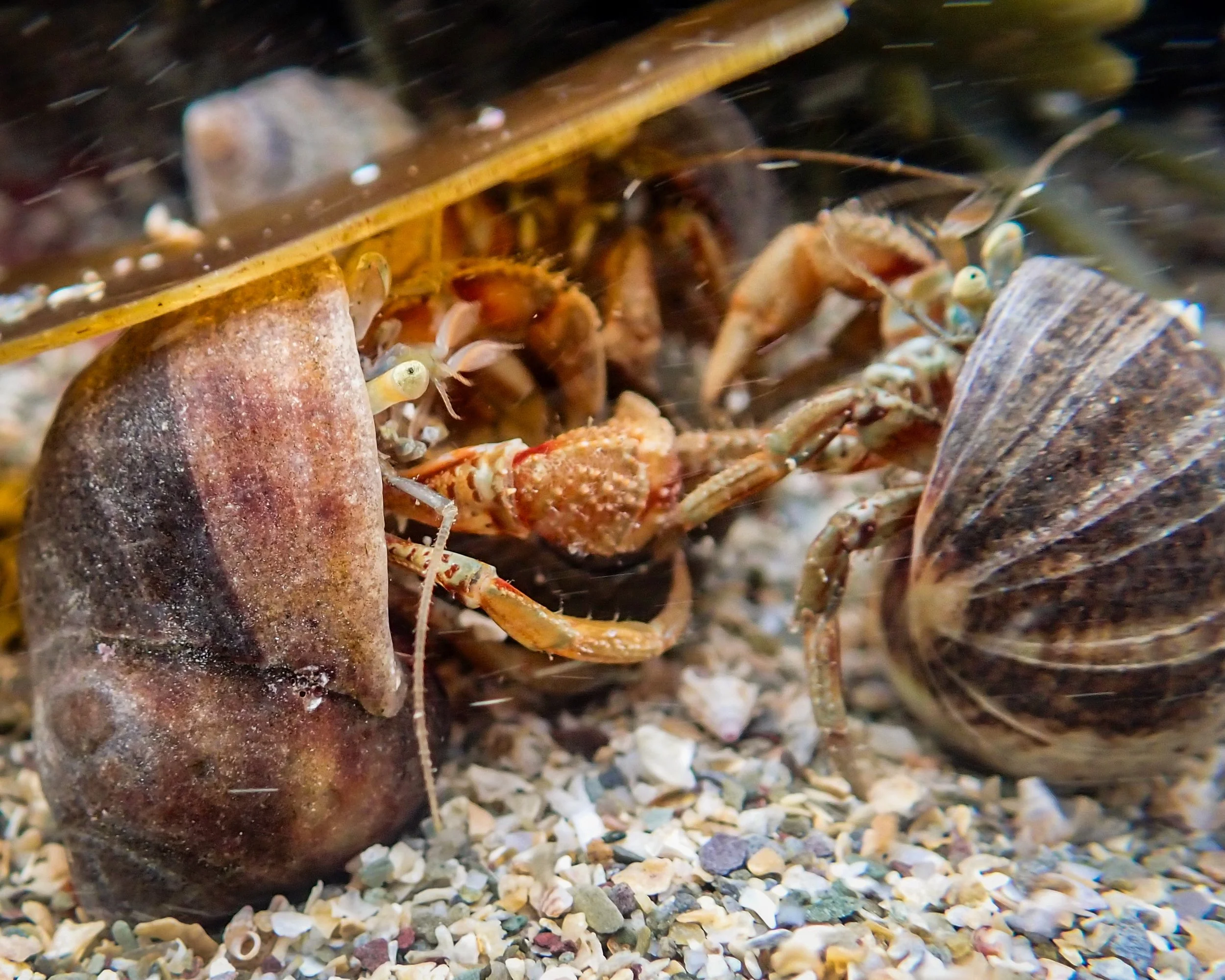
Hermit crabs, fascinating creatures that rely on the shells of dead sea snails for protection, are currently facing a challenge here in the UK. The changing climate has warmed ocean currents, allowing the spread of a non-native species, the Mediterranean intertidal hermit crab (Clibanarius erythropus). This newcomer is now competing with our native hermit crabs, especially the common European hermit crab (Pagurus bernhardus), for shells and space along the shore.
Over the past 15 months, I have been researching what shells hermit crabs use and how this new source of competition might impact shell choice and usage patterns. Shell selection studies have been a theme in hermit crab research. Being in the middle of a climate change facilitated-range expansion provides an excellent opportunity to see first-hand how ecosystem change can alter choice and what effect resource restriction has on the ability of an animal to survive.
As part of this project, I am also looking into how differences in biology and behaviour impact resource acquisition, population structure and the distribution and abundance of both species.
-
-
-
-
-
Papers
Intraspecific Sensory Diversity and the Decapod Claw: Patterns of Sensillation Are Heterochelic and Sexually Dimorphic In Pagurus bernhardus
Journal of Morphology 2025
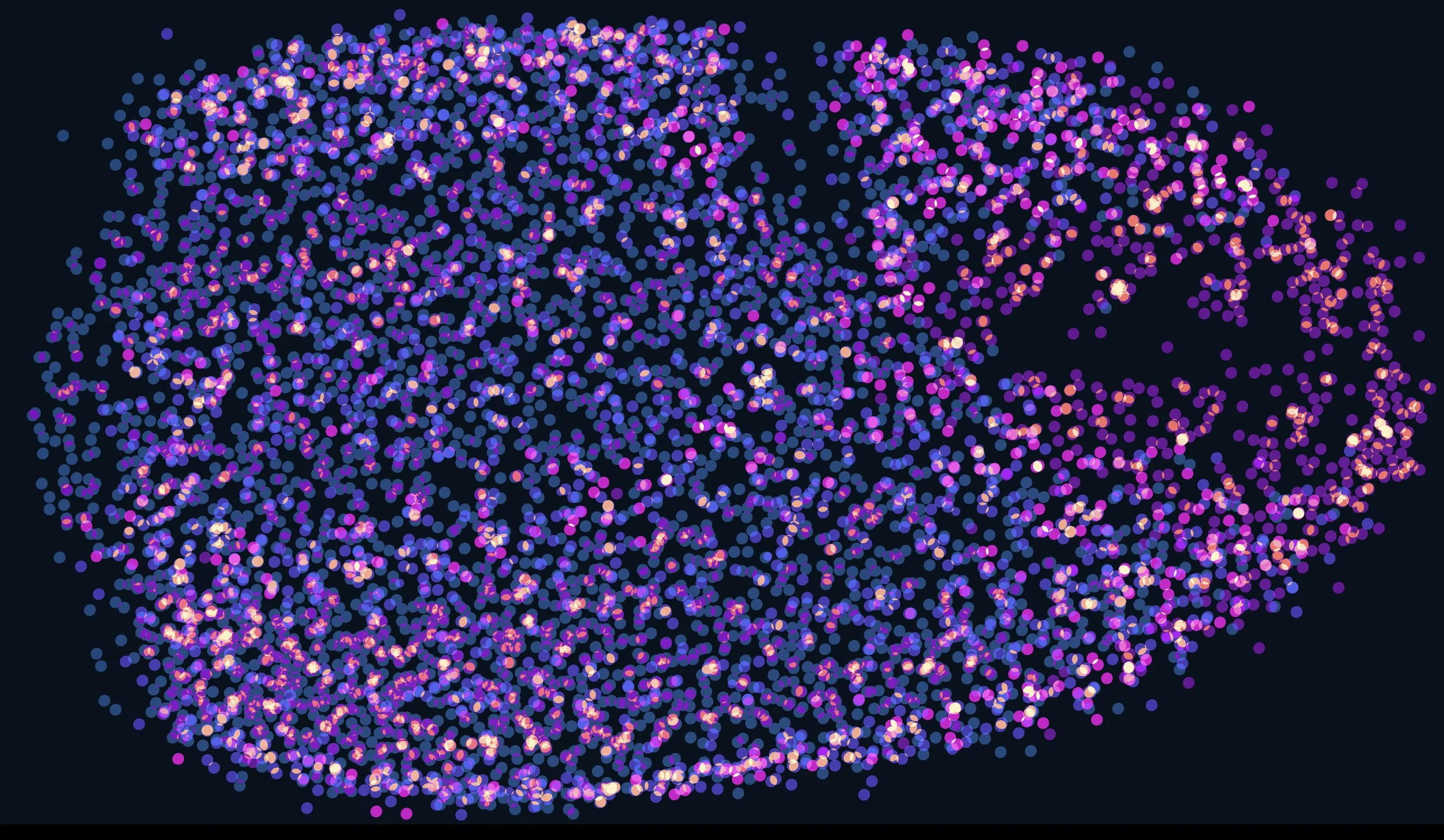
Although information detection is essential for animals, many aspects of sensory biology have yet to be explored. Additionally, variation in sensory biology (or sensory diversity) within a given species is often overlooked. Using the common hermit crab (Pagurus bernhardus), The Crab Lab Team looked at how the density and distribution of sensory hairs (or sensilla) differ between the right and left claw (major and minor cheliped) and between female and male crabs. With a novel method that used scanning electron microscopy (SEM) to examine hermit crab moults, we looked at the overal morphological variation and the sensory variation of the claws. We found distinct differences between the sexes (sexual dimorphism) and between the right and left claws (heterochely). In so doing, we show the importance of sensory variation in understanding animal morphology and the importance of sensory variation in the evolution of information acquisition.
Citation:
Drummond, A., Holloway, T., Nash, S., Wilson, A.D.M., Turner, L.M., Briffa, M. and Bilton, D.T. (2025), Intraspecific Sensory Diversity and the Decapod Claw: Patterns of Sensillation Are Heterochelic and Sexually Dimorphic In Pagurus bernhardus. Journal of Morphology, 286: e70054. https://doi.org/10.1002/jmor.70054

Coming soon…
We are waiting for another really cool research project to be published for all to see… Check back soon!
Coming soon…
We are waiting for another really cool research project to be published for all to see… Check back soon!
Projects
Shell Showdown: Resource Competition and Novel Competitive Interactions in Intertidal Hermit Crabs
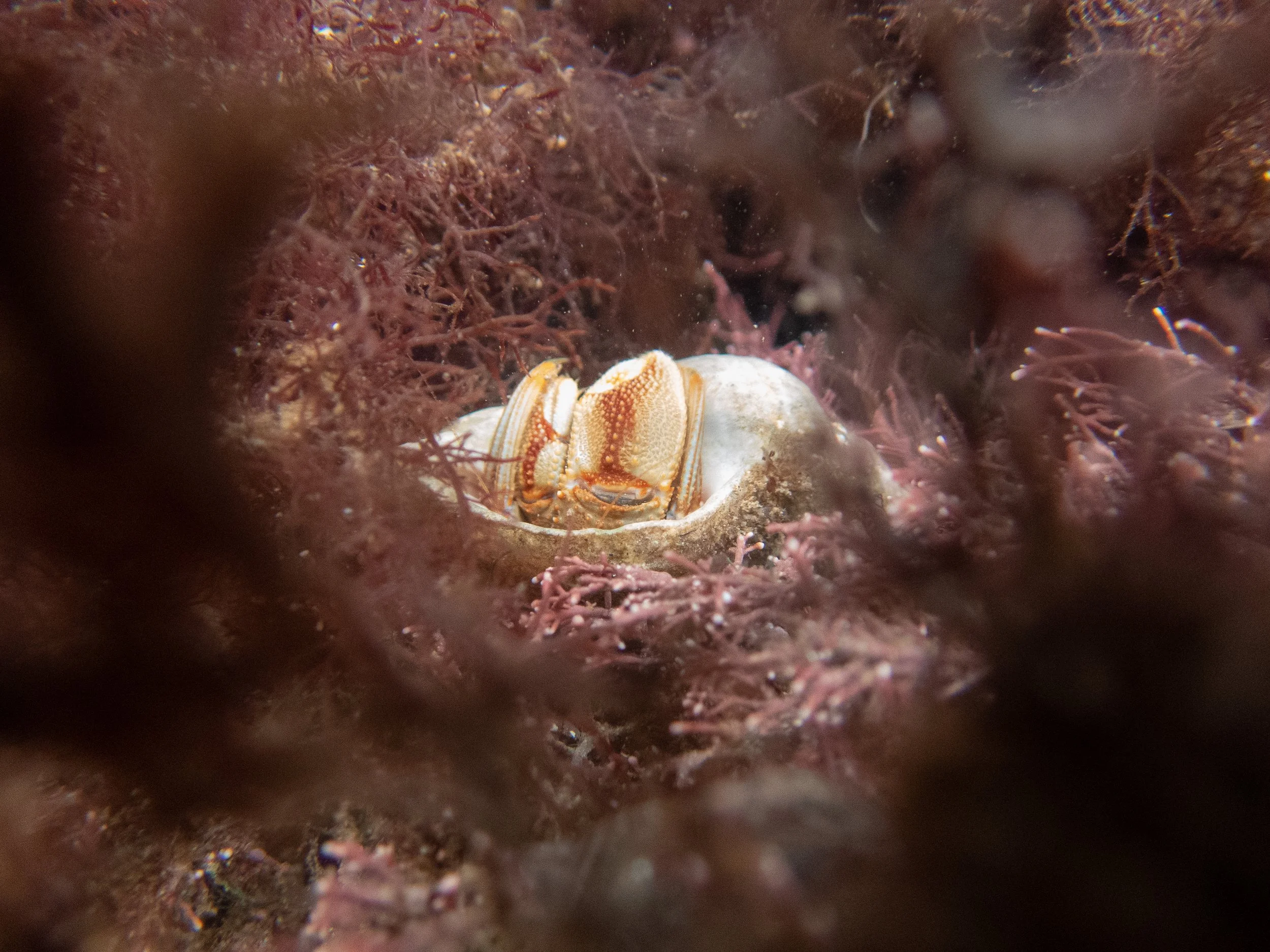
Hermit crabs must use the shells of dead sea snails to protect their soft abdomen. These shells also act as portable burrows as the crabs traverse tidepools. Due to the climate change-facilitated range expansion of the Mediterranean intertidal hermit crab, Clibanarius erythropus, the native UK species, the common hermit crab Pagurus bernhardus, faces increased competition for shells and space in rocky shore habitats. Field studies on the shell usage patterns of both species support the hypothesis of resource overlap. Furthermore, laboratory experiments demonstrate that while the two species differ in some preferences, shell choice overlap occurs, and this novel competition may lead to resource restriction in the common hermit crab (P. bernharuds).
Crustacean Celebration
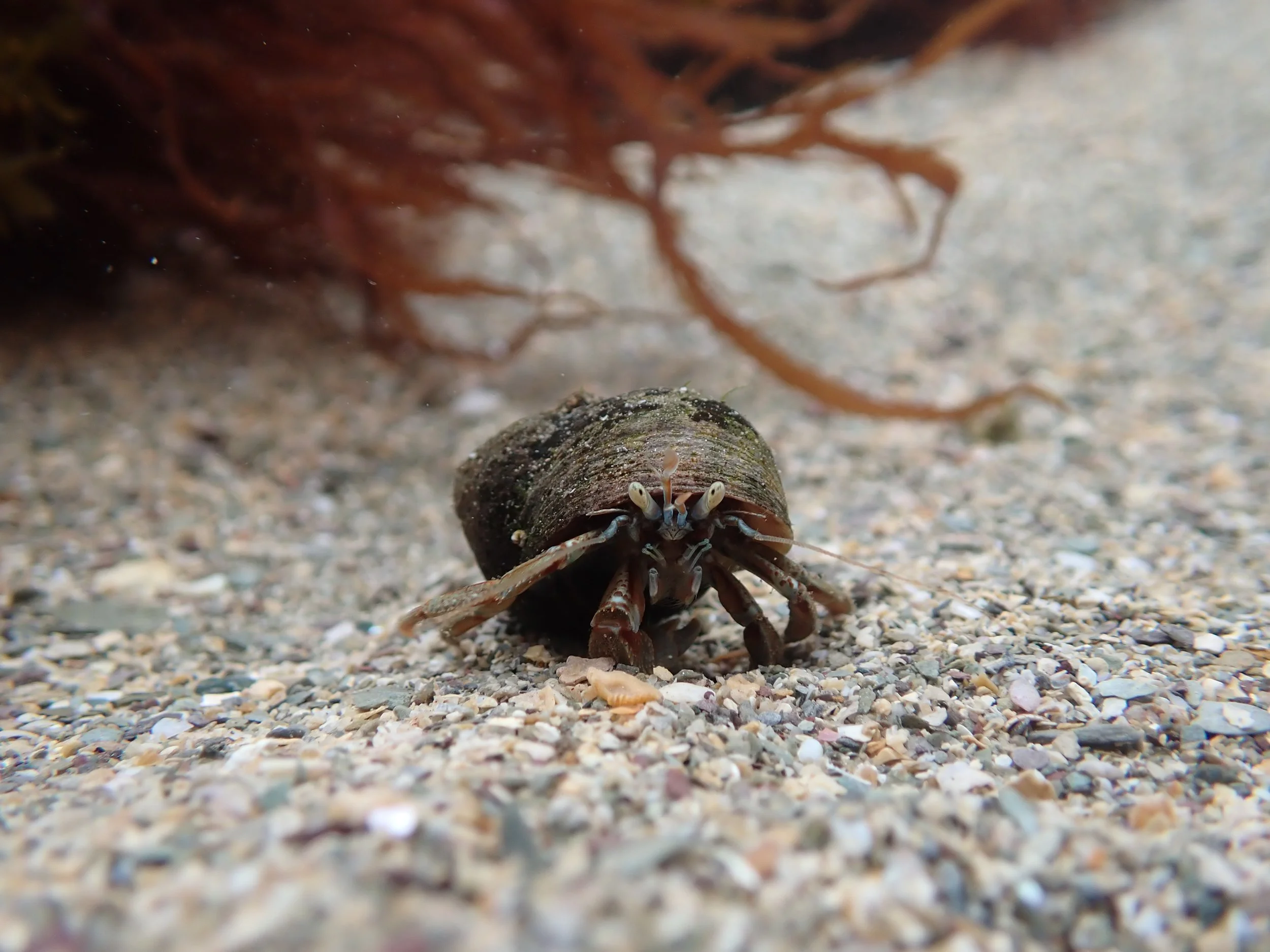
Meet the common hermit crab (Pagurus bernhardus)